
The Importance of Trusting Your Gut and Qualitative Data in the Customer Experience World

In the evolving landscape of customer experience (CX), the role of data has become paramount. Companies increasingly rely on quantitative data—metrics, statistics, and measurable KPIs—to assess performance, anticipate customer needs, and strategize future initiatives. However, while quantitative data provides valuable insights, it is only part of the CX story. Equally essential is the qualitative data that emerges from personal insights, customer narratives, and human-centered research. Furthermore, the CX field requires professionals to “trust their gut,” utilizing intuition and experiential knowledge as indispensable tools alongside hard data. Integrating qualitative data and intuitive insights into CX practices provides a more holistic, human-centered approach that deepens customer relationships, enhances product relevance, and fosters loyalty.
The Value of Trusting Your Gut in CX
"Trusting your gut" refers to an intuitive decision-making process that relies on experience, emotions, and subconscious cues rather than strictly analytical thinking. In customer experience, intuition is often cultivated over time as practitioners learn to “read” the subtle nuances in customer behavior that might not immediately appear in data. This intuitive approach is vital in situations where quantitative data may be limited, conflicting, or unable to capture the entirety of the customer’s context.
For example, CX professionals often interact with customers in real time, sensing dissatisfaction even before a survey confirms it. By trusting their gut, they might proactively address a potential issue, improving the customer’s experience and potentially reducing churn. This ability to act swiftly and appropriately in real-time often hinges on a deep-seated understanding of customer needs, an understanding that goes beyond what numbers alone can indicate. When CX specialists rely solely on quantifiable metrics, they may miss opportunities to build trust, address unspoken concerns, or identify emotional drivers that influence customer satisfaction.
Intuition in CX is not arbitrary but rather informed by a combination of experience and empathy. While data points might show a 10% drop in customer satisfaction, for instance, an experienced CX manager might intuitively sense the problem’s root cause based on previous interactions. This nuanced approach acknowledges that customers are not just data points—they are individuals with complex needs, emotions, and expectations.
The Role of Qualitative Data in CX
Just as intuition plays a key role in understanding customers, qualitative data is equally indispensable in CX. Qualitative data encompasses feedback from interviews, open-ended survey responses, social media comments, and observational insights. Unlike quantitative data, which seeks to answer “how many” or “how much,” qualitative data answers “why” and “how,” providing rich, descriptive insights that illuminate the motivations behind customer behavior.
Qualitative data allows CX teams to dive deeper into the human aspects of their business. For instance, a quantitative analysis might reveal that customers frequently abandon their shopping carts before purchase. However, it is through qualitative methods—like interviewing customers or analyzing comments—that a company can learn that the cart abandonment stems from complex checkout processes or a lack of trust in payment security. By understanding the “why” behind customer actions, CX teams can implement changes that resonate with customer expectations, going beyond surface-level adjustments to enact meaningful improvements.
Moreover, qualitative data captures sentiment and context, offering a more comprehensive view of the customer’s journey. Customer emotions, perceptions, and attitudes are essential components of CX, and they are difficult to quantify. Tools such as sentiment analysis, customer journey mapping, and ethnographic research allow CX professionals to build a vivid picture of the customer experience, identifying pain points and areas for improvement that quantitative data alone may overlook.
Balancing Quantitative and Qualitative Data in CX
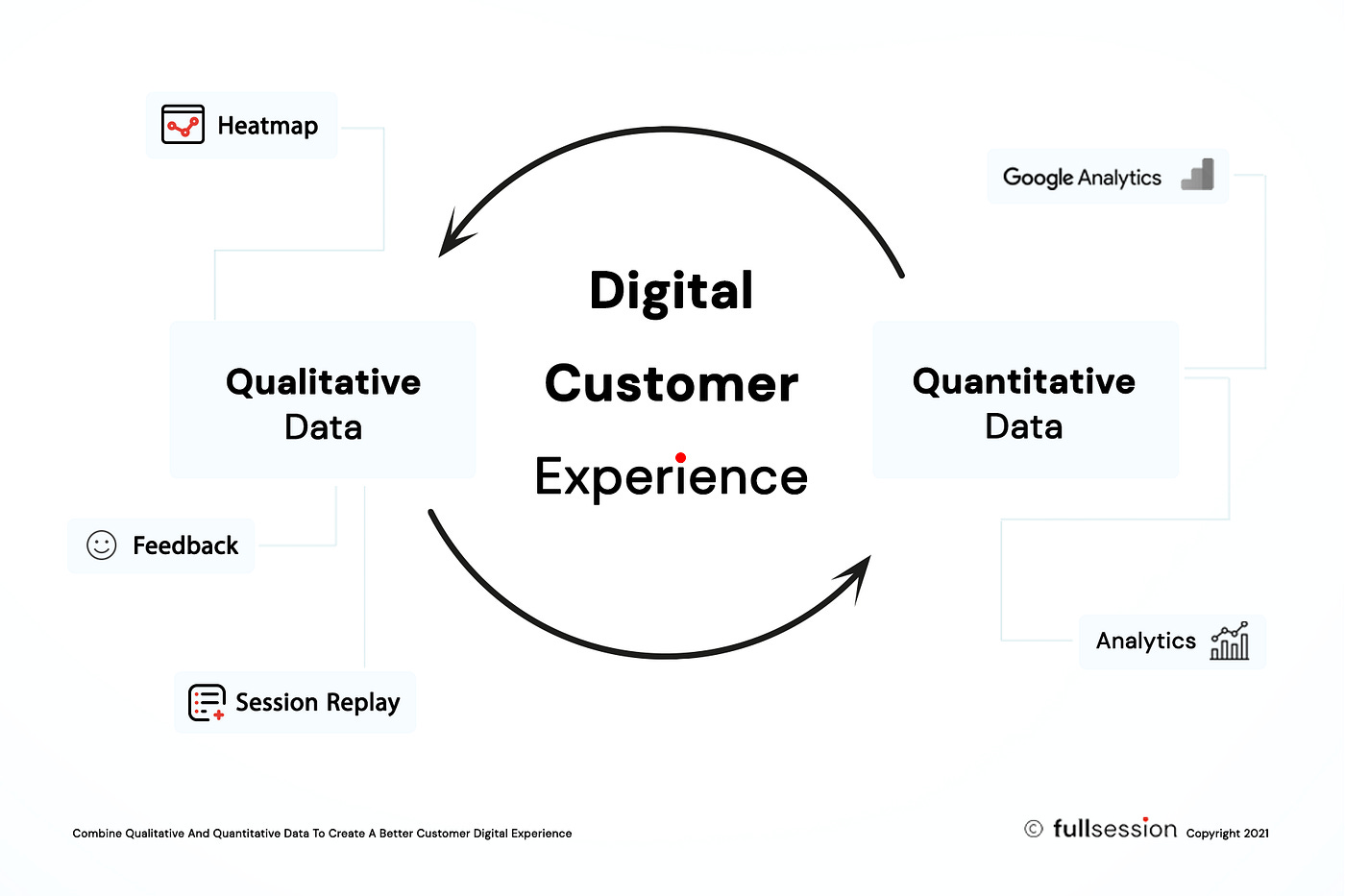
In customer experience, it is not a question of choosing between qualitative and quantitative data but rather knowing how to balance and integrate the two. Quantitative data provides a broad overview, signaling where issues may lie and giving CX teams a benchmark for progress. Qualitative data, on the other hand, provides the depth and context needed to understand those signals, allowing CX teams to address not only the symptoms but also the root causes of customer dissatisfaction.
For instance, consider a scenario in which quantitative data shows an uptick in support tickets following a software update. While the data identifies an area of concern, it is the qualitative feedback from users that will reveal whether customers are frustrated by the interface, encountering bugs, or struggling with new features. By combining these insights, a company can both recognize the scope of an issue and gain the information necessary to resolve it effectively.
In some cases, trusting gut intuition can also help interpret or fill gaps in data, leading CX professionals to ask the right questions or pursue specific avenues of research. Often, this instinct-driven line of inquiry yields qualitative data that adds invaluable texture to the data-driven insights. A well-rounded CX strategy, therefore, relies on data that is both broad and deep, with quantitative and qualitative insights working in tandem to present a full picture of customer experience.
The Human-Centered Imperative
Ultimately, the combination of trusting one’s gut and utilizing qualitative data underscores a broader shift toward human-centered CX strategies. Customers today seek personalized, empathetic service that treats them as individuals rather than transactions. By recognizing the value of intuition and qualitative insights, CX professionals demonstrate that they are responsive to the human elements of customer experience.
This human-centered approach builds stronger customer relationships and fosters a sense of loyalty that purely quantitative strategies may not achieve. When customers feel that a company understands their experiences, anticipates their needs, and genuinely cares about their satisfaction, they are more likely to remain loyal, promote the brand, and provide valuable feedback. As such, companies that effectively balance quantitative data with intuition and qualitative insights can cultivate a more authentic and enduring connection with their customers.
Conclusion
In the world of customer experience, trusting one’s gut and integrating qualitative data with quantitative metrics is crucial. This balanced approach ensures that CX teams understand not only the trends and patterns in customer behavior but also the underlying motivations, emotions, and context that drive these behaviors. By blending quantitative data with qualitative insights and intuitive expertise, companies can build a customer experience strategy that resonates on a human level, fosters loyalty, and ultimately drives success. Embracing both types of data—and recognizing the value of intuition—is what sets truly customer-centered organizations apart, helping them adapt to evolving customer expectations in an increasingly data-driven world.
Hey Clay, love your article. Having worked on implementing processes in the organisations to gather feedback and thereafter to gather insights and implement corrective actions . I found one og the most challenging tasks is to get the Customer response and seek his attention to answer the questions of survey sincerely. The quality of feedback received in one on one interactions is useful. you are in what business. I would like to keep in touch and interact more over a zoom call some day convenient. Which country are you based in. I am in India .