
Navigating the 'Market Vibe Check'
What Volatility Means for Your Paycheck and Peace of Mind

The stock market ticker might feel like a high-stakes, confusing game happening on a different planet. But when it starts bouncing around like a toddler on a sugar rush, that volatility has a very real, tangible effect on employees—especially those in the once-unshakeable tech sector.
Forget the fancy financial jargon; let’s talk about what this rollercoaster economy means for your job security, your compensation, and your daily workplace stress.
The Ripple Effect: How Market Anxiety Hits the Average Employee
When the broader market—fueled by interest rates, inflation, and general global jitters—gets jumpy, it sends a predictable set of tremors through corporate America.
1. The Compensation Chill 🧊
Your salary might be stable (for now), but volatility fundamentally changes the value of your Total Rewards Package.
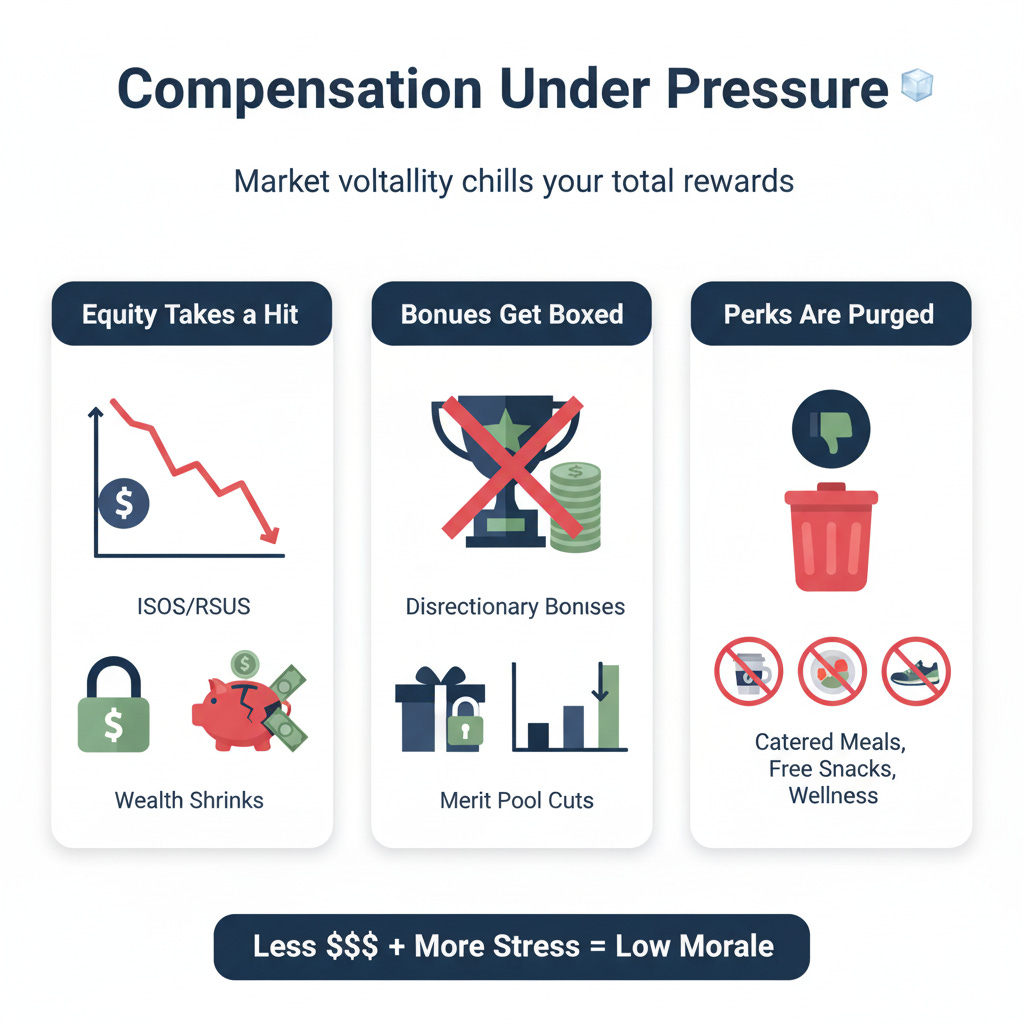
Equity Takes a Hit: This is most pronounced in tech. If your compensation includes Incentive Stock Options (ISOs) or Restricted Stock Units (RSUs), a plummeting stock price means your personal wealth is shrinking. Those future payouts you were counting on for a down payment or retirement? They’re suddenly worth less, causing significant financial stress.
The Bonus Box Closes: Companies facing uncertain revenue forecasts are quick to cut variable costs. That means discretionary bonuses, profit-sharing checks, and even annual merit increase budgets get dramatically tightened, if not frozen altogether.
Perks Get Purged: Remember the catered lunches, the fancy office snacks, and the generous wellness stipends? These “perks” are often the first things trimmed in a cost-cutting effort, making the work environment feel measurably less rewarding.
2. Job Security: Welcome to the ‘Slow Fire’ Economy
For the general US workforce, market instability signals a shift from a “hiring spree” to a “hiring hesitancy.”
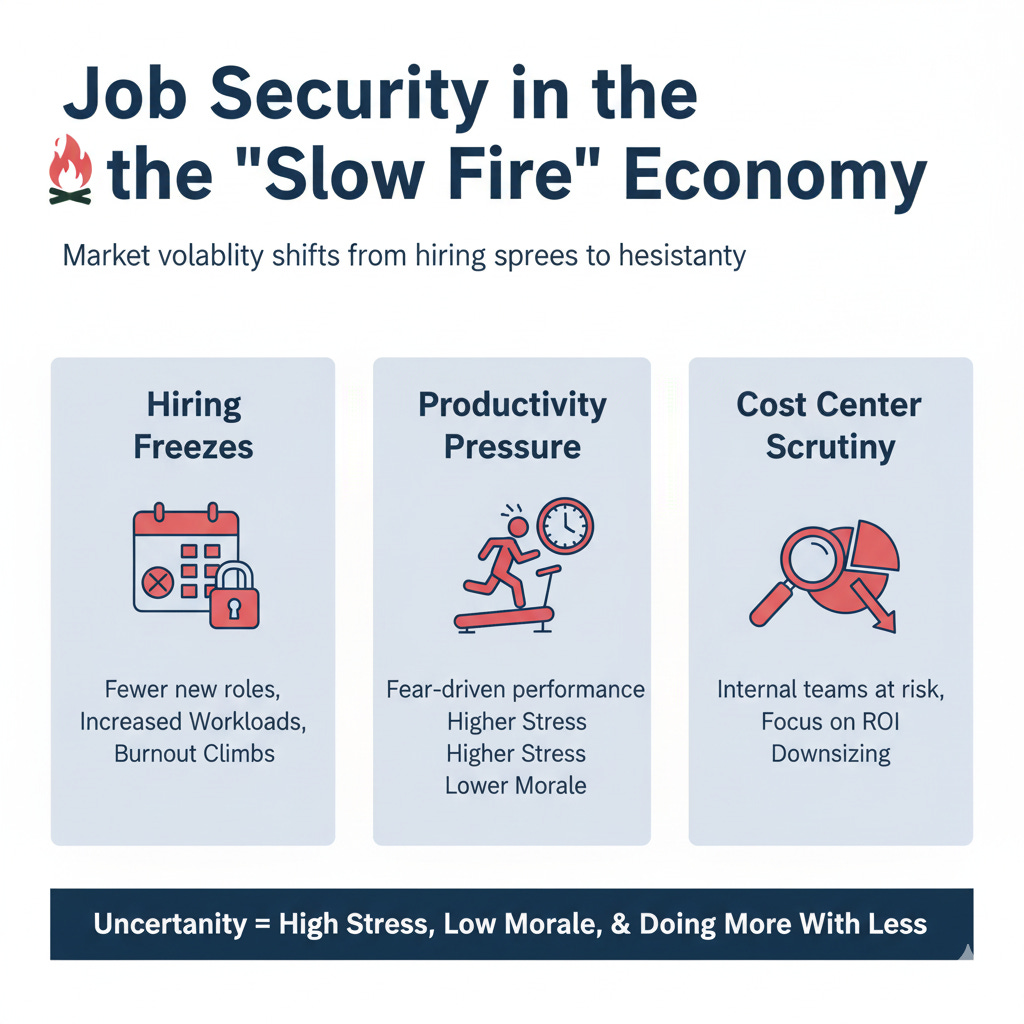
Hiring Freezes: Instead of immediate, mass layoffs, most companies first resort to hiring freezes. This means current employees face increased workloads as the company attempts to do the same work with fewer people. Burnout starts to climb.
Increased Productivity Pressure: There’s evidence that employees tend to work harder in more volatile business environments. While this might sound good for the company, it’s driven by the fear that if they don’t perform at peak, their role might be next on the chopping block. Volatility converts to higher stress and lower morale.
Focus on Cost Centers: Teams perceived as “cost centers” (like internal operations, or departments not directly generating revenue) suddenly face intense scrutiny and are at higher risk of downsizing.
Spotlight on Tech: Where the Vibe Shift Hit Hardest
No sector has felt the sting of volatility quite like the tech industry. After a decade of hyper-growth fueled by cheap capital and pandemic demand, the pivot to efficiency has been brutal.
In 2023 and 2024, the tech world saw hundreds of thousands of layoffs—a stark correction from the pandemic-era over-hiring. The reasons are threefold:
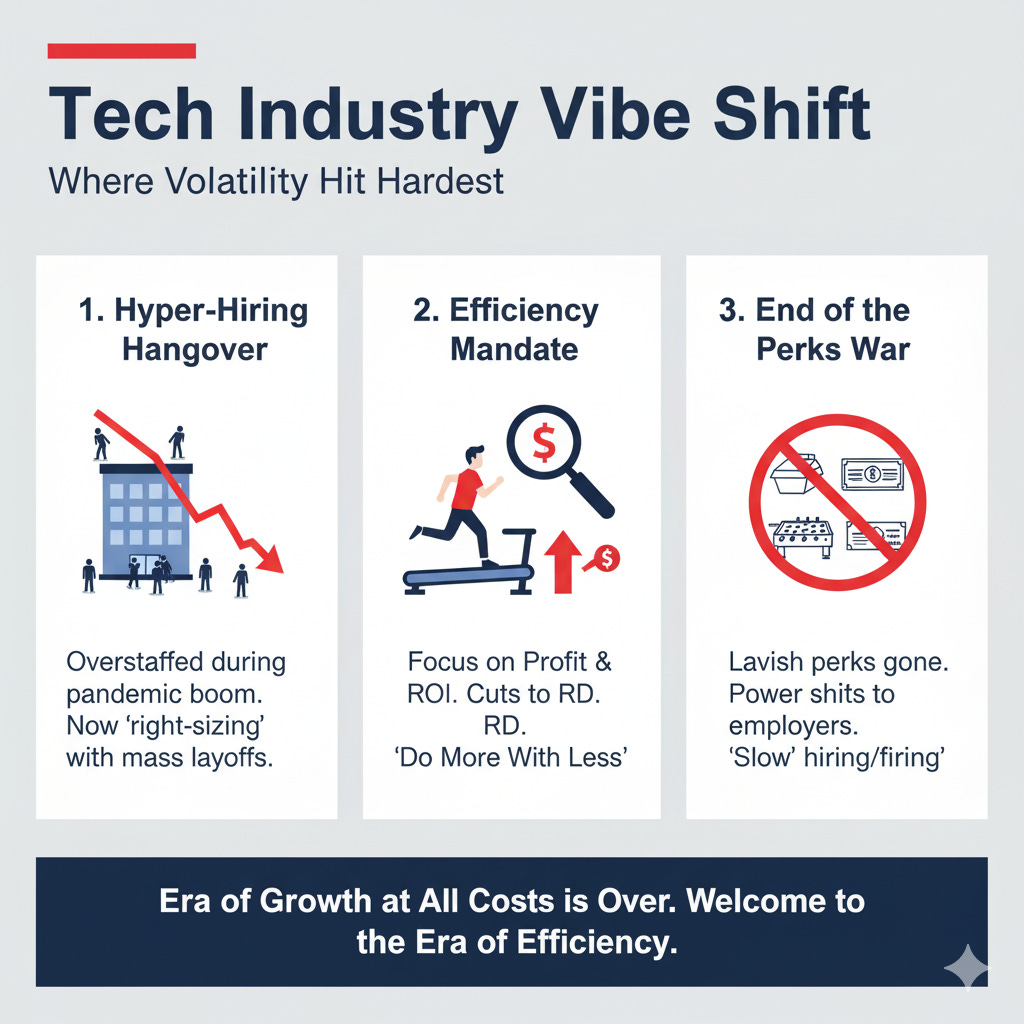
1. The Hangover from Hyper-Hiring
When interest rates were near zero, venture capital flooded the market. Tech companies hired at breakneck speed, assuming the exponential growth of the pandemic would be permanent. When consumer spending softened and capital got expensive, they found themselves overstaffed and had to slash payroll to “right-size” the business. The result? Mass layoffs became a quarterly ritual.
2. The Efficiency Mandate (or, ‘Do More With Less’)
The new mantra in tech isn’t “grow at all costs”; it’s “show me the profit.” This means every dollar spent is scrutinized.
Engineering vs. Experimentation: Projects that don’t have a clear, immediate ROI are shelved. Teams focused on long-term research or novel features are often dissolved in favor of teams that can deliver essential, profitable products now.
The AI Smokescreen? While some job cuts are genuine restructuring to embrace AI-driven efficiencies, leaders have also been accused of using AI as a convenient, modern explanation for cuts that were primarily about addressing market instability and unsustainable compensation packages. In many cases, it’s a talent remix, not a replacement, focusing on high-value, AI-adjacent roles.
3. The End of the ‘Perks War’
The lavish corporate campus, the unlimited PTO, the insane sign-on bonuses—these were tools used to compete for scarce talent during the boom. With a softer labor market, companies have pulled back, shifting the power dynamic from the employee back to the employer. The industry is currently in a state of “slow hiring, slow firing,” meaning it’s harder to get a new job, but also not a total bloodbath.
Your Game Plan: Three Ways to Win Against Uncertainty
So, what’s the antidote to market anxiety? A proactive approach.
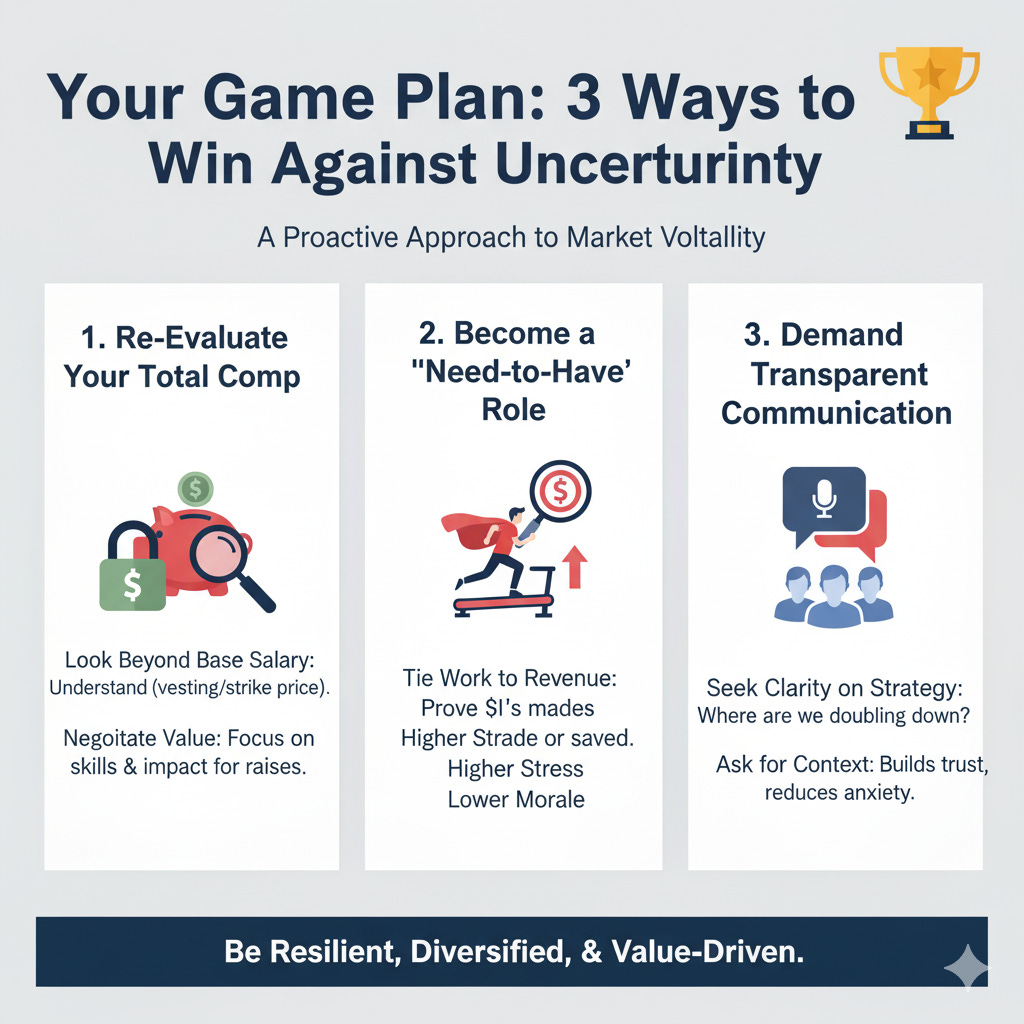
1. Re-Evaluate Your Total Comp
Look Beyond the Base: If you have company equity, stop looking at the headline price and understand your vesting schedule and strike price. Consult a financial advisor to build a plan that isn’t overly reliant on your employer’s stock.
Check the Clock: If you’re due for a performance review or compensation discussion, be realistic. Focus your negotiation on skills and impact rather than cost-of-living adjustments, which companies are increasingly resisting.
2. Become a “Need-to-Have” Role
In a volatile environment, you want to be indispensable.
Tie Your Work to Revenue: Can you clearly articulate how your projects either make the company money or save the company money? When budget cuts happen, the person who can prove their dollar-in, dollar-out value is safer than the person with a vague job description.
Acquire Adjacent Skills: Focus on learning skills the company is actively prioritizing, especially around data, AI integration, and core product metrics. This makes you more versatile and less likely to be cut if your immediate function is downsized.
3. Demand Transparent Communication 🗣️
The greatest killer of morale during uncertainty is silence. If your leadership team is vague, employees will fill that void with the worst-case scenario (i.e., rumors of layoffs).
As an employee, you should seek and, if necessary, demand:
Clarity on Strategy: Where is the company doubling down, and where is it cutting back?
Context for Decisions: Why was the hiring freeze enacted? Transparency, even about bad news, builds more trust than vague reassurances.
Market volatility is essentially a test of corporate discipline. For employees, it’s a stressful reminder that career planning needs to be resilient, diversified, and focused on value creation, regardless of the whims of Wall Street.